
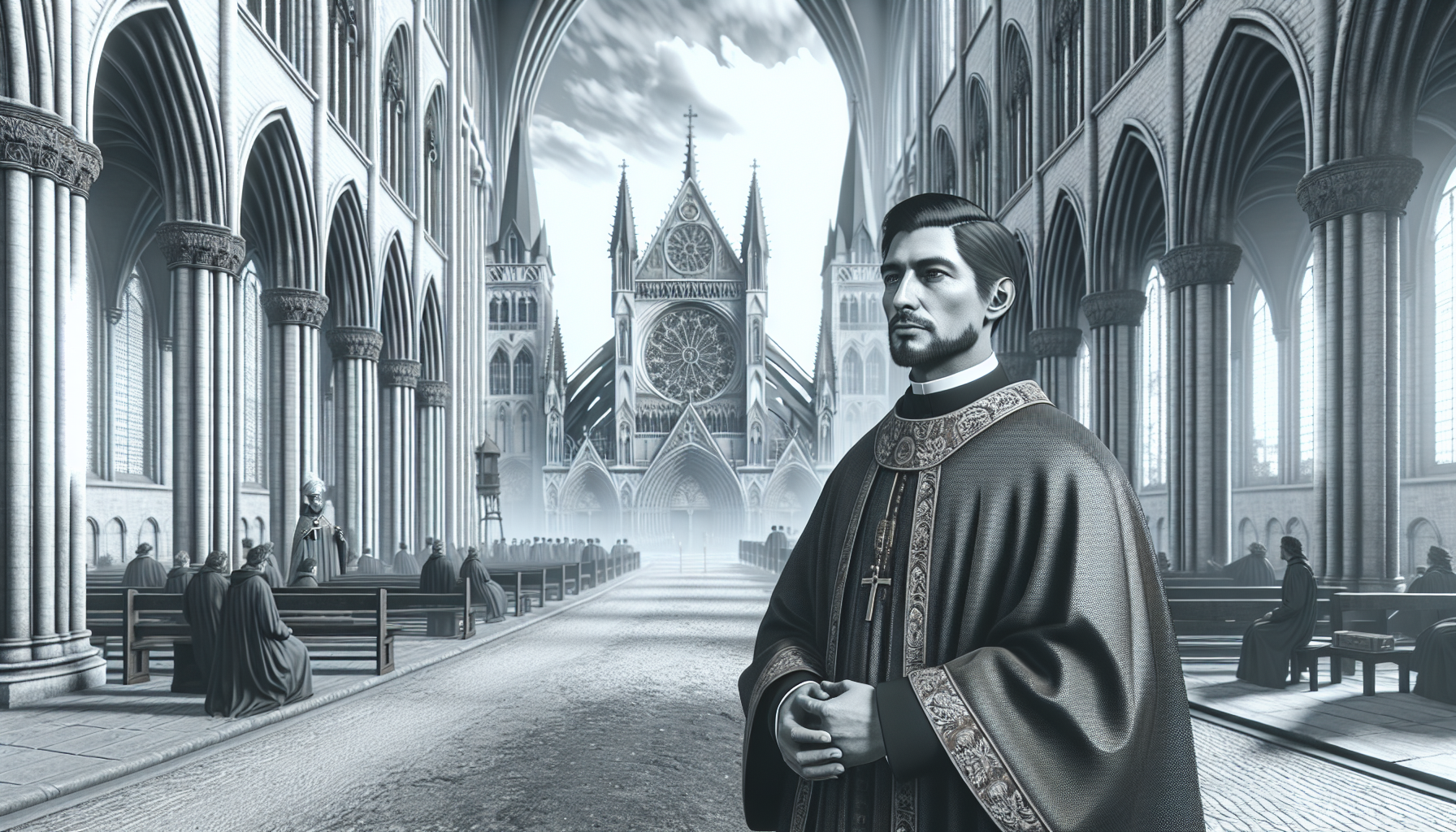
The picturesque town of Dozulé, in the heart of Normandy, France, recently found itself at the center of a centuries-old debate: the legitimacy of supernatural sightings. These discussions were reignited when Pope Leo XIV declared that the rumored apparitions of Jesus Christ in the town were not of divine origin.
The story dates back to the 1970s when a local Catholic mother, Madeleine Aumont, claimed to have seen Jesus 49 times. According to her accounts, Jesus instructed her to construct the “Glorious Cross of Dozulé,” a monumental structure meant to soar over 2,000 feet into the sky and be illuminated for all to see. While a smaller version of this cross exists in Dozulé today, the Vatican’s doctrinal office, with Pope Leo XIV’s approval, has categorically stated that these apparitions lack supernatural roots.
In an official statement, Pope Leo XIV emphasized, “The Cross does not need 738 meters of steel or concrete to be recognized: It is raised every time a heart, moved by grace, opens itself to forgiveness.” This sentiment reflects a broader theological perspective that places emphasis on spiritual truths over physical manifestations.
Father Patrick Mary Briscoe, a Dominican friar based in Rome, provided further insight into the Church’s stance. He explained that while the Dozulé messages intrigued some, they were never officially endorsed by the Church. “The Church’s decision is a reminder that our hope isn’t in private revelations or sensational claims, but in the power of the sacraments and the truth of the Gospel,” said Briscoe.
Pope Leo XIV’s declaration serves as a crucial reminder for the faithful to focus on the core tenets of Christianity rather than get sidetracked by unverified mystical experiences.
Ensuring Public Trust in Spiritual Matters
Pope Leo XIV’s decision to publicly address the Dozulé apparitions highlights the importance of Public trust in the Church’s discernment processes. By prioritizing doctrinal clarity over sensational claims, the Vatican aims to guide believers towards authentic faith experiences. This approach not only reinforces the Church’s credibility but also strengthens the foundation of spiritual truth, fostering a more grounded and unified community.
Father Briscoe noted, “Pope Leo’s approval of this declaration shows how seriously the church takes discernment in spiritual matters — not to suppress faith, but to purify it.”
In a world often swayed by the allure of the extraordinary, the Vatican’s decision underscores the importance of anchoring faith in established doctrine and tradition. As Father Briscoe pointed out, “The Vatican’s discernment here safeguards authentic devotion. This is about protecting believers from confusion. The Vatican isn’t closing the door on devotion. Instead, Pope Leo is keeping the focus where it belongs — on Christ.”
This decision not only clarifies the Church’s position regarding the Dozulé apparitions but also reinforces Pope Leo XIV’s commitment to addressing contemporary issues with doctrinal clarity. His recent comments on modern challenges, such as compulsive gambling and internet addiction, highlight his awareness of the pressing issues faced by today’s society.
As the town of Dozulé continues its quiet existence in Normandy, the conversation around faith, devotion, and discernment remains as relevant as ever, reminding the global community of the enduring power of spiritual truth over sensationalism.
Source: Rumored supernatural sighting of Jesus in France debunked by Pope Leo XIV