Air And Space Skies at Stake: Inside the US-China Race for Air Dominance
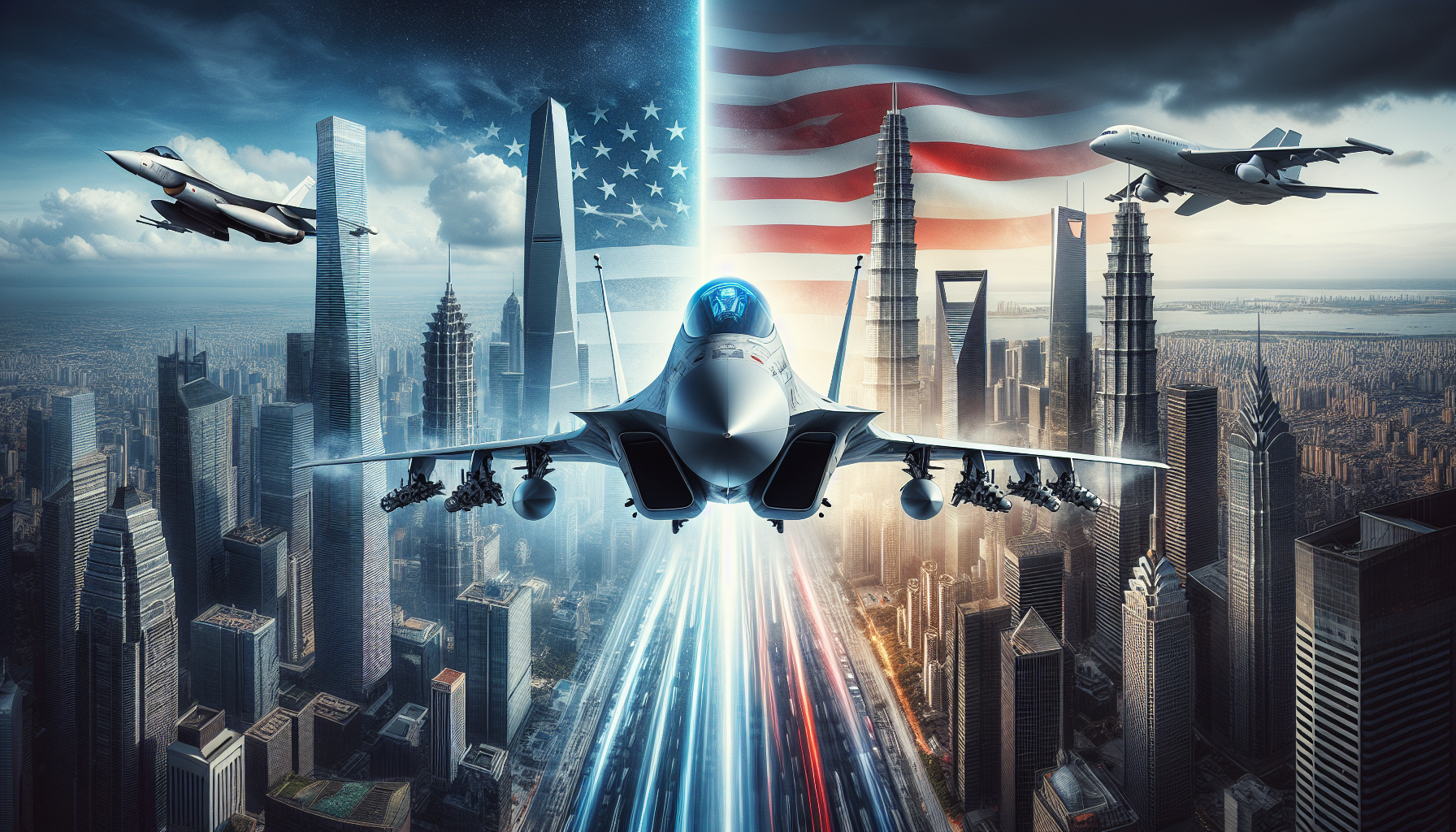
The competition for air superiority between the United States and China is heating up as both nations strive for dominance over the Pacific skies. With advancements in stealth technology, next-generation fighters, and AI-enabled drones, each country is preparing to secure its position as the leader in aerial warfare.
US Advances in Airpower
The United States is making significant strides with its F-47 fighter and B-21 bomber programs. The F-47, a manned sixth-generation fighter, is expected to take its first flight in 2028, marking a crucial step in America’s quest for air superiority. Meanwhile, the B-21 Raider is undergoing rigorous testing at Edwards Air Force Base, with plans to acquire at least 100 units. These stealth bombers are designed to penetrate heavily defended Chinese airspace.
In addition to these advancements, the Pentagon is investing in Collaborative Combat Aircraft (CCAs), which are drones designed to operate alongside manned fighters. Prototypes from companies like Anduril and General Atomics are already undergoing testing, promising a future where one pilot can control multiple drones simultaneously.
China’s Leap Forward
China is not standing idly by. Its airpower modernization focuses on three areas: stealth, engines, and carriers. The Chengdu J-20, China’s flagship stealth fighter, is being equipped with the new WS-15 engine, aiming to compete with US counterparts. Furthermore, the commissioning of China’s third aircraft carrier, the Fujian, symbolizes Beijing’s ambition to project power far beyond its shores.
China’s layered airpower network, consisting of the J-20, carrier-based J-35, and the Fujian, is supported by an expanding missile coverage. Chinese military strategy emphasizes targeting airfields early in a conflict to incapacitate enemy air operations, a tactic driven by their historical airpower weaknesses.
Different Strategies, Same Goal
The US and China are adopting distinct strategies to achieve air dominance. The US relies on advanced, sensor-integrated aircraft capable of long-range strikes, while China focuses on mass-producing fighters and missiles to overwhelm US defenses. The challenge for both nations is surviving within each other’s defensive perimeters.
US aircraft, such as the F-35, F-15, and F-22, must operate close to Taiwan to engage effectively, placing them within China’s missile range. Conversely, China’s missile capabilities are expanding, potentially pushing US forces further away from the conflict zone.
The Fight for Survivability
Survivability is poised to become the defining factor in future air competitions. The threat is not just from aerial dogfights but from the vulnerability of air bases to missile strikes. While China hardens its bases and practices runway strikes, the US is criticized for not adequately protecting its own airfields.
In the early stages of a conflict, China may hold an advantage, but over time, the US can reinforce its forces, potentially shifting the balance. The Pentagon’s upcoming budget will significantly impact the pace at which the US can expand its F-47s, B-21s, and CCAs, shaping American airpower for the coming decades.
Looking Ahead
Although China is rapidly closing the gap, the US still maintains advantages in stealth integration, combat experience, and autonomous systems. The ability to protect and disperse air assets will be crucial for maintaining a strategic edge in the Asia-Pacific region.
For decades, US air dominance was a given, but in the Pacific theater, that advantage is increasingly contested. Both nations are preparing for a future where air superiority is not guaranteed, and the skies are a decisive battleground.
Source: Skies at stake: Inside the US-China race for air dominance